
Comparing Native vs Hybrid Apps: Pros and Cons – Insights from Instagram and Twitter
Introduction
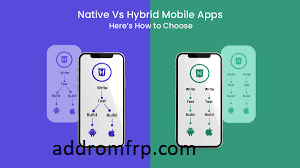
Mobile apps are everywhere — they run our lives, businesses, or even our entertainment. But in the back of each app is a vital selection: should you cross local or hybrid? With giants like Instagram and Twitter mixing both procedures, it’s crucial to comprehend which model fits your needs and quality — particularly in case you’re developing for the aggressive U.S. marketplace. In this deep dive, we will destroy local vs. hybrid apps, examine them head-to-head, and display your actual international examples from top manufacturers. Plus, we’ll explore how addromfrp permits you to navigate this preference.
What Are Native Apps?
Definition and How They Work
Native apps are constructed specially for one platform—either Android or iOS. In this approach, a local iOS app is written using Swift or Objective-C, while an Android version would use Java or Kotlin.
Common Native App Examples
Think of Facebook, WhatsApp, or Snapchat. These apps provide terrific, straightforward enjoyment because they may be constructed from the floor up to paintings flawlessly on their respective devices.
Languages Used in Native App Development
iOS: Swift, Objective-C
Android: Kotlin, Java
This devoted improvement method often results in better overall performance but with a better cost and time investment.
What Are Hybrid Apps?
Definition and How They Work
Hybrid apps are net applications wrapped in a local container. They run on more than one structure from a single codebase. This is ideal if you’re targeting Android and iOS without doubling your development efforts.
Common Hybrid App Examples
Apps like Uber, Instagram (partially), and Twitter have hybrid elements. These apps use web perspectives to show content but can nonetheless access local tool capabilities.
Languages and Frameworks Used
Popular equipment for building hybrid apps encompasses:
React Native (utilized by Facebook)
Flutter (with the aid of Google)
Ionic
Xamarin
Key Differences Between Native and Hybrid Apps
Performance
Native apps win fingers down in terms of overall performance. They load quicker and are more responsive.
User Experience (UX)
A native app provides a smoother, greater intuitive experience as it’s constructed for that precise working machine.
Development Time and Cost
Hybrid apps are extra affordable and faster to expand. You write one codebase and deploy it anywhere.
Maintenance and Updates
Updating a hybrid app is simpler — you repair it as soon as possible, and it works across systems. Native apps require platform-unique updates.
Case Study: Instagram
Native Components in Instagram
Instagram started primarily locally to ensure pinnacle-notch overall performance and responsiveness.
Hybrid Strategies Used by Instagram
Eventually, Instagram integrated React Native for components in their interface to streamline development and preserve a regular look and feel across systems.
Benefits Instagram Gained
Faster new release velocity
Unified UI across gadgets
Lower protection effort
Case Study: Twitter
Twitter’s Initial Native Approach
Twitter started with native development, particularly on iOS.
Why Twitter Moved to Hybrid Elements
To roll out updates faster and reduce improvement complexity, Twitter included net technologies.
Outcomes of the Transition
Speedier characteristic rollout
Reduced fees
Slight exchange-off in UX
Pros of Native Apps
Superior Performance
Native apps are optimized for their platform. This means faster load instances and smoother animations.
Better Offline Functionality
Local apps manage offline scenarios better since they’re constructed to run on specific gadgets.
Seamless Integration with Device Features
From digital cameras get entry to push notifications, local apps integrate deeply with device APIs.
Cons of Native Apps
High Development Cost
You’ll need separate teams (or, at minimum, separate codebases) for Android and iOS. That’s money and time.
Time-Consuming to Build for Multiple Platforms
Want to launch on each platform? Be ready to copy your efforts.
Pros of Hybrid Apps
Faster Development Time
Build once, installation anywhere — that’s the hybrid promise.
Lower Costs
One crew can construct for each structure, notably reducing prices.
Easier Maintenance
Updates and trojan horse fixes occur once, not twice.
Cons of Hybrid Apps
Potential Performance Issues
Hybrid apps lag or carry out suboptimally depending on your app’s complexity.
Less Optimal UX
It’s challenging to fit the smoothness of local apps, mainly for animation-heavy studies.
Search engine optimization and Market Considerations for the U.S.
U.S. App Usage Trends
In the U.S., performance and consumer experience closely impact app evaluations and downloads. Native apps often have higher retention rates.
Search Behavior Related to App Performance
Users within the U.S. Actively look for apps with key phrases like “quickest,” “smoothest,” or “first-class enjoy.” Native apps rank higher in these regions.
Which Should You Choose?
When to Go Native
You need top-tier performance
You’re building complicated or image-heavy apps.
Budget isn’t a constraint.
When to Choose Hybrid
You want to launch quickly and on more than one platform.
Your app isn’t overall performance-important
You’re operating with a reasonable budget.
How addromfrp Can Help
addromfrp allows corporations to examine their cellular app techniques by offering tailor-made consultations, design assistance, and development solutions whether or not you are going local, hybrid, or something else.
Future Trends in App Development
Progressive Web Apps (PWAs)
PWAs bridge the space, imparting near-local performance in a browser-like way.
AI and Machine Learning in Mobile Apps
Expect greater customization and innovative apps that adapt in real time to user conduct.
Evolving User Expectations
Today’s customers need pace, protection, and splendor — whichever technique can help them win.
Conclusion
Choosing between native and hybrid apps isn’t a one-length-fits-all decision. It relies upon your desires, timeline, and finances. With insights from systems like Instagram and Twitter and steering from platforms like addromfrp, you’re now better prepared to make the correct name in your